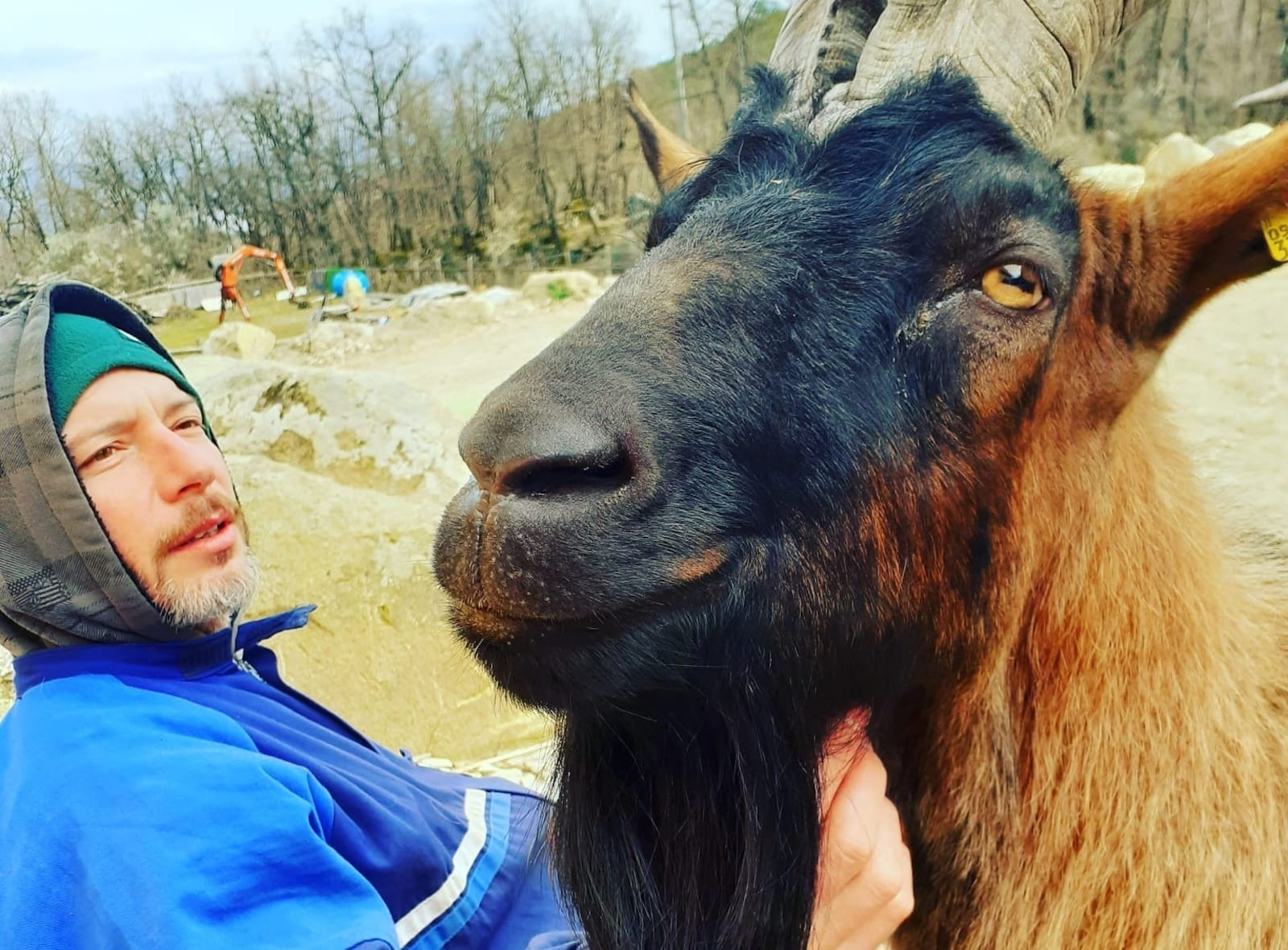
The story of Mezzavia begins with an authentic passion—one that accompanies a lifetime before ever becoming a profession. For many years, Angelo raised horses, until his deep bond with animals led him to discover a new world: sheep and goats. This is how a first small farm was born, built on observation, patience, and experimentation.
Over time, Angelo realized that the animal best suited to this land was the goat: free, curious, able to choose what to eat, to seek out rocks, brambles, and the plants that suit it best. It is an animal that truly lives the landscape, rather than enduring it.
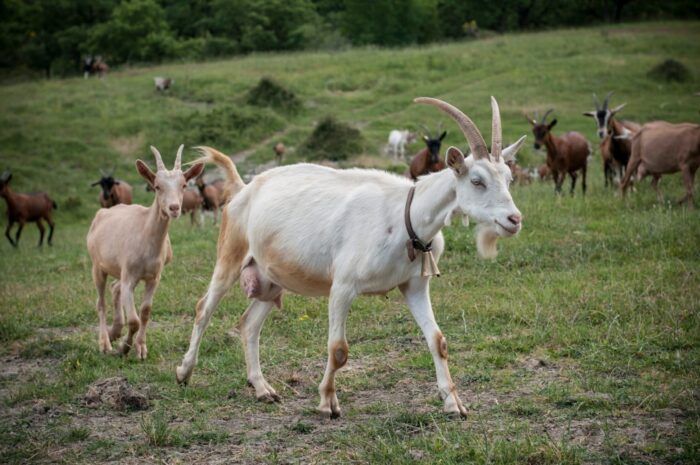
His son Luciano and his partner Leonora later took on this legacy, gradually shaping the farm’s future. In 2014, they launched a rural development project to build the structures needed for production. At first, they sold only small amounts of milk, but the dream grew together with the herd. They started with Alpine Chamois goats, crossing them with local breeds to strengthen their genetics, while staying true to their philosophy of free grazing. Every day, the goats roam freely on Monte Amiata from morning until evening—no rigid enclosures, no forcing.
Before opening their dairy, Luciano and Leonora chose to train seriously, specializing in cheesemaking in Cuneo, where they learned how to fully value goat’s milk. It is a product still little known and often underestimated, especially in Tuscany, where sheep’s milk and pecorino dominate. Yet goat’s milk, despite its lower yield, is more digestible, has finer fats, and is among the closest to human milk in composition.
In 2020, they finally opened their new dairy and made a bold decision: to work exclusively with raw milk. It is a choice that demands extreme care, cleanliness, and responsibility, but one that preserves all the nuances of the territory and of the goats’ seasonal diet.
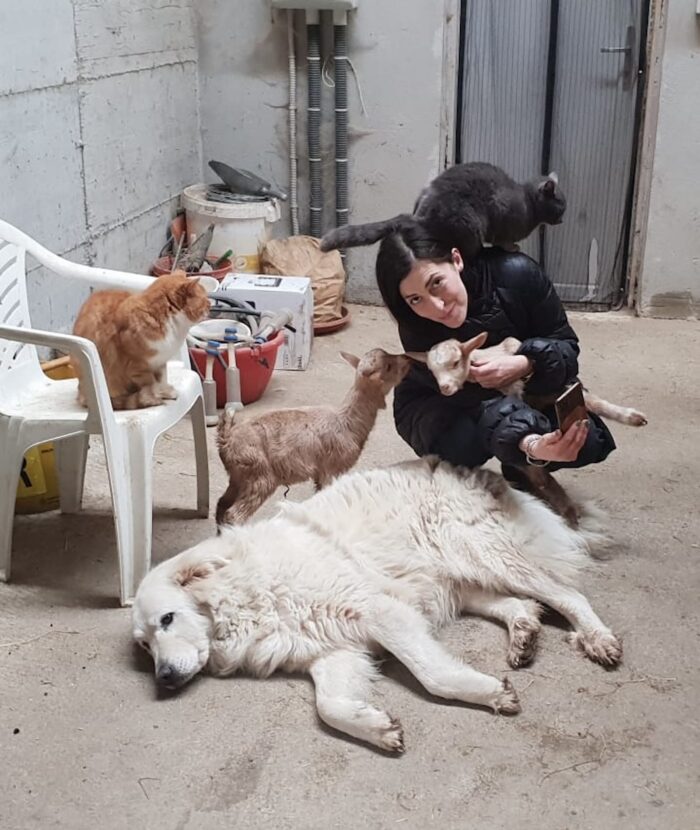
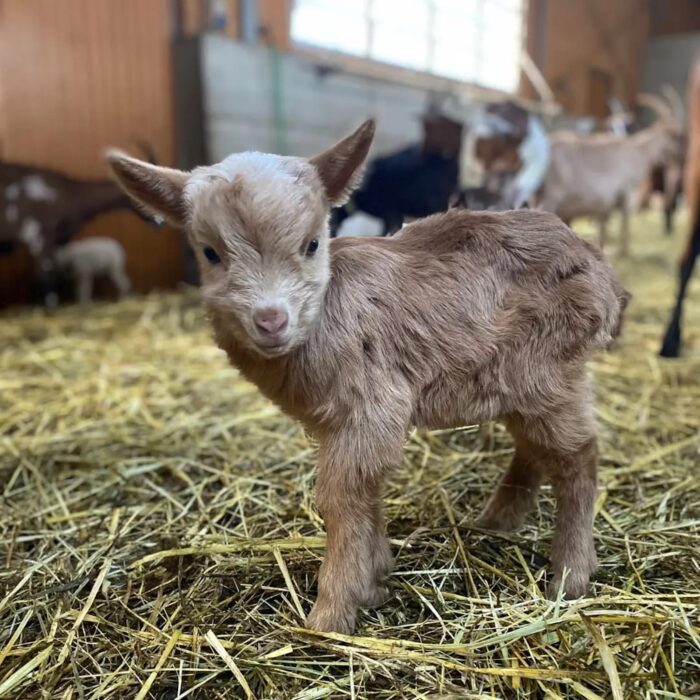
What made us truly fall in love with this farm are its ethical choices. In many intensive systems, animals are sent to slaughter as soon as milk production declines, and kids are separated from their mothers just days after birth. Luciano and Leonora completely reject this logic. The milk is shared with the kids until weaning, and the animals remain part of the herd even when production decreases.
“We don’t like the idea of an animal that has given you so much being treated like an object as soon as something changes,” Leonora says. It may seem like a radical choice to some, but it is the only way they can imagine doing this work.
The true richness of these cheeses lies in their constant evolution. Because the goats graze freely, the milk changes with the seasons: in winter it carries notes of pine, bramble, chestnut, and acorn; in spring it becomes fresher and more floral, with hints of grass and flowers.
From the patio at Serendipity, you can see the hills where these goats roam, watching the vegetation change and imagining the paths the animals will choose day after day on the mountain. We couldn’t help but bring this richness to our menu.