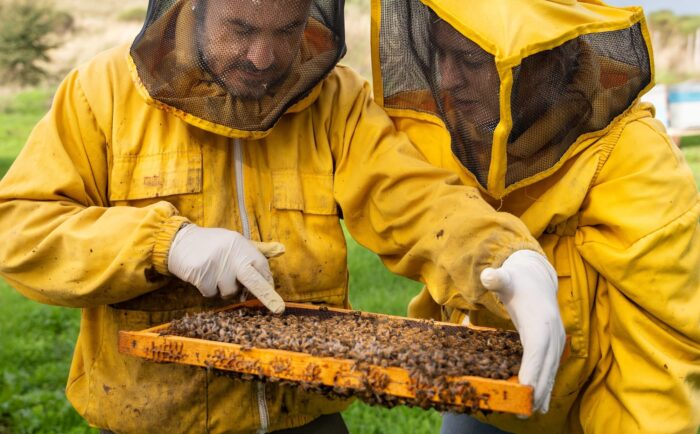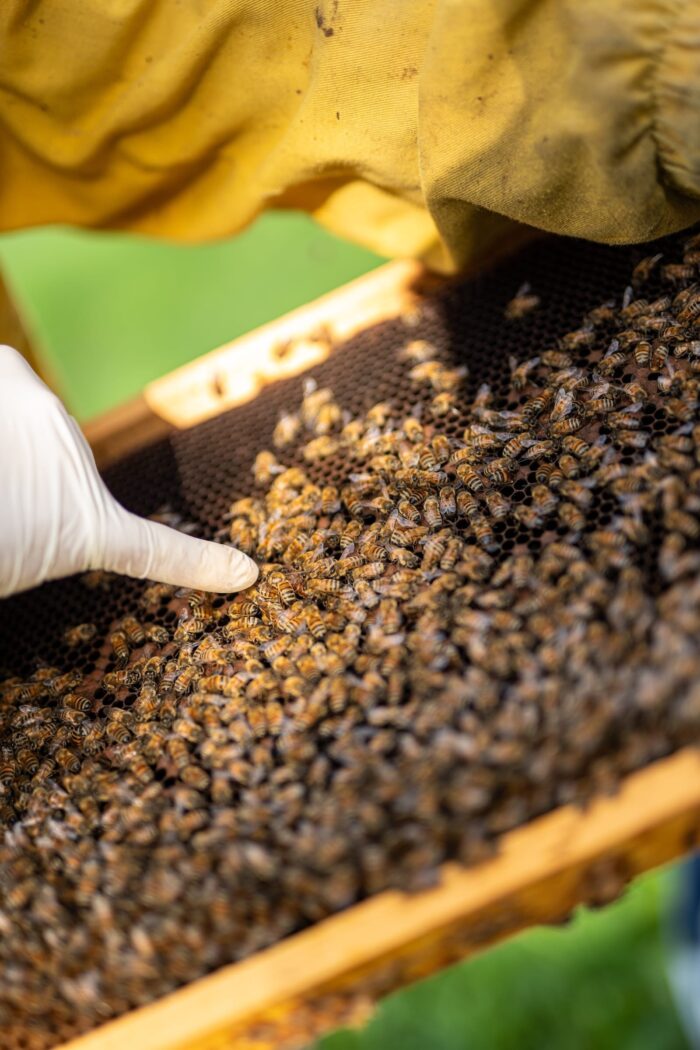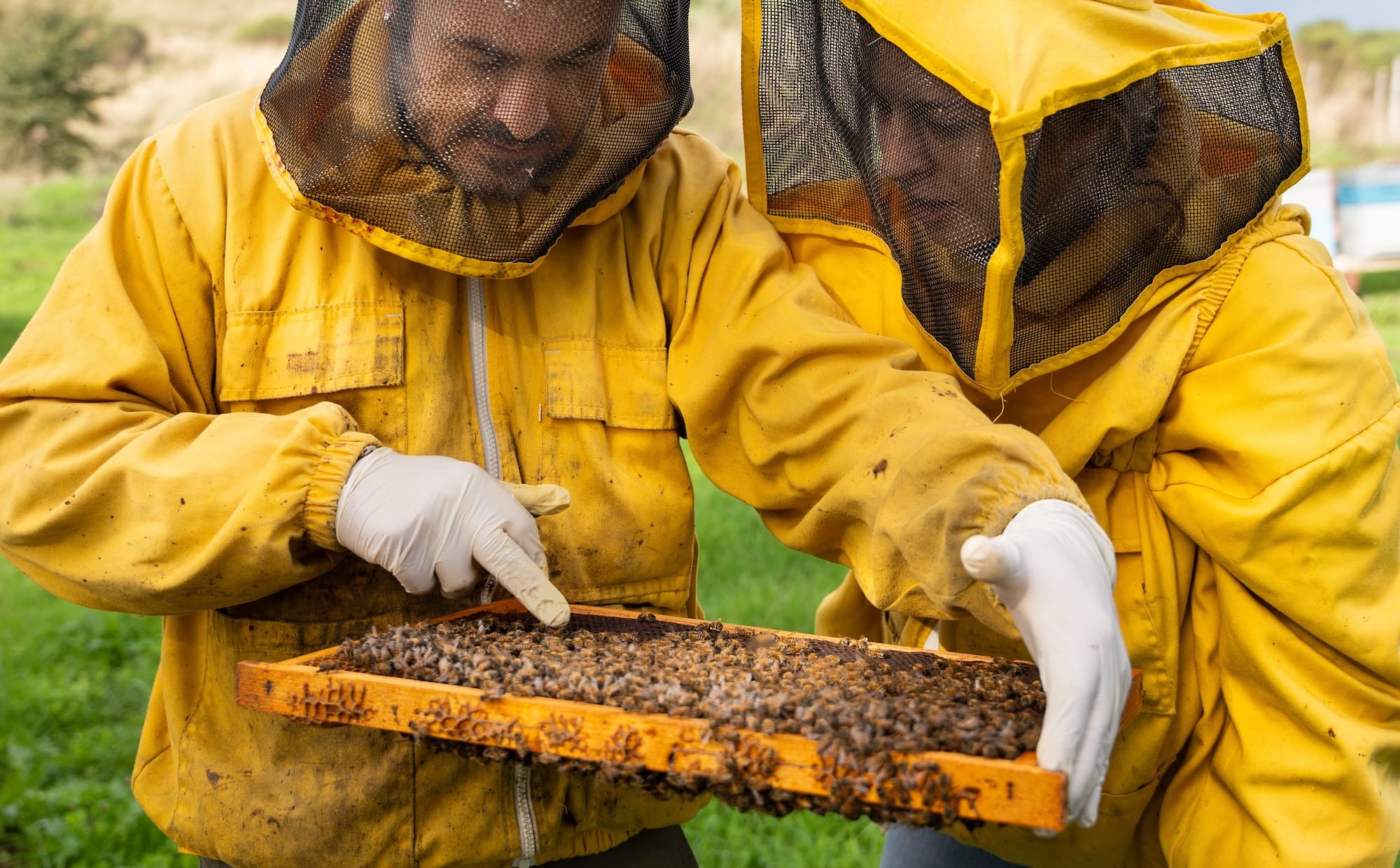
At Serendipity, in the heart of Montalcino, bees are an essential part of our farm’s identity.
Nestled in the rolling landscape of the Val d’Orcia, surrounded by vineyards, olive groves and wild garden areas, the beehives reflect a deeper commitment to biodynamic and regenerative agriculture.
Here, bees are not introduced simply for honey production, but as key contributors to a healthy ecosystem. Their presence supports biodiversity, encourages natural balance, and strengthens the vitality of the land. In a circular economy farm, where everything is connected, the activity of bees becomes part of a wider agricultural vision, one that respects the rhythms of nature and avoids synthetic inputs, in line with organic principles.
The honey produced at Serendipity is a direct expression of this environment. It captures the aromatic complexity of the surrounding landscape: wild herbs, spontaneous flowers, and the Mediterranean vegetation that grows between the rows of Sangiovese. Each jar is a reflection of place, season, and climate—an authentic Km0 product that changes subtly from year to year.
This approach fits naturally within a farm to table philosophy. Honey is not just a product, but part of a broader experience: it can be tasted alongside the wines, our cheeses from Mezzavia and other local ingredients, or enjoyed while taking in the panoramic view over the Tuscan hills, with the nearby Sant’Antimo Abbey completing the sense of place.
Visiting Serendipity is also about embracing a slower rhythm. It is an off-the-beaten-path destination, where slow travel meets agricultural authenticity. At sunset, as the light softens over the vineyards, the quiet work of the bees continues—reminding us that great landscapes and great wines are shaped by small, essential gestures repeated over time.
In this context, honey becomes more than a product: it is a symbol of balance between human activity and nature, a pure and living expression of Tuscany and its enduring agricultural heritage.