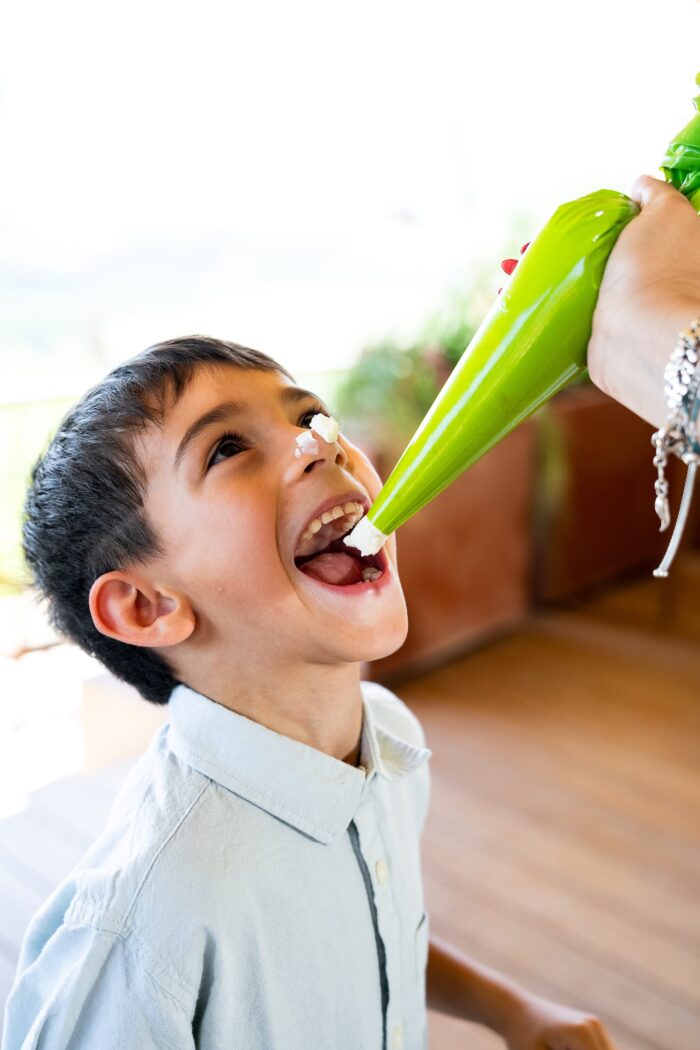
This year is a year of growth for Serendipity. We’re trying to focus on what really matters, to understand how we can keep improving. Cooking, as we see it, sits at the very center of our philosophy: eating well, growing what we have in our garden with care, following the seasons. The idea isn’t to force or manipulate what nature gives us, but to bring out its true character. That’s where the idea came from: to share our vision through cooking classes.
Our cooking classes change every time, shaped by whatever the harvest gives us on that specific day. People become part of our everyday life for a few hours: it starts in the garden, where we go together to pick exactly what we’ll use — aromatic herbs, tomatoes, vegetables, salad greens. It’s an important moment to share our values and our biodynamic growing methods.
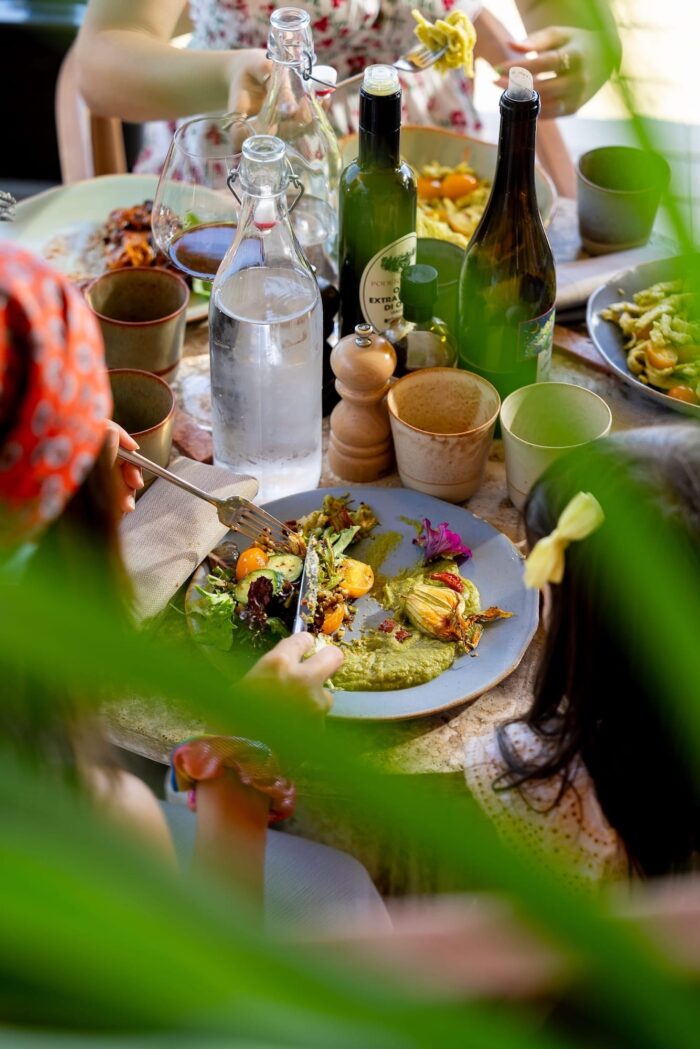
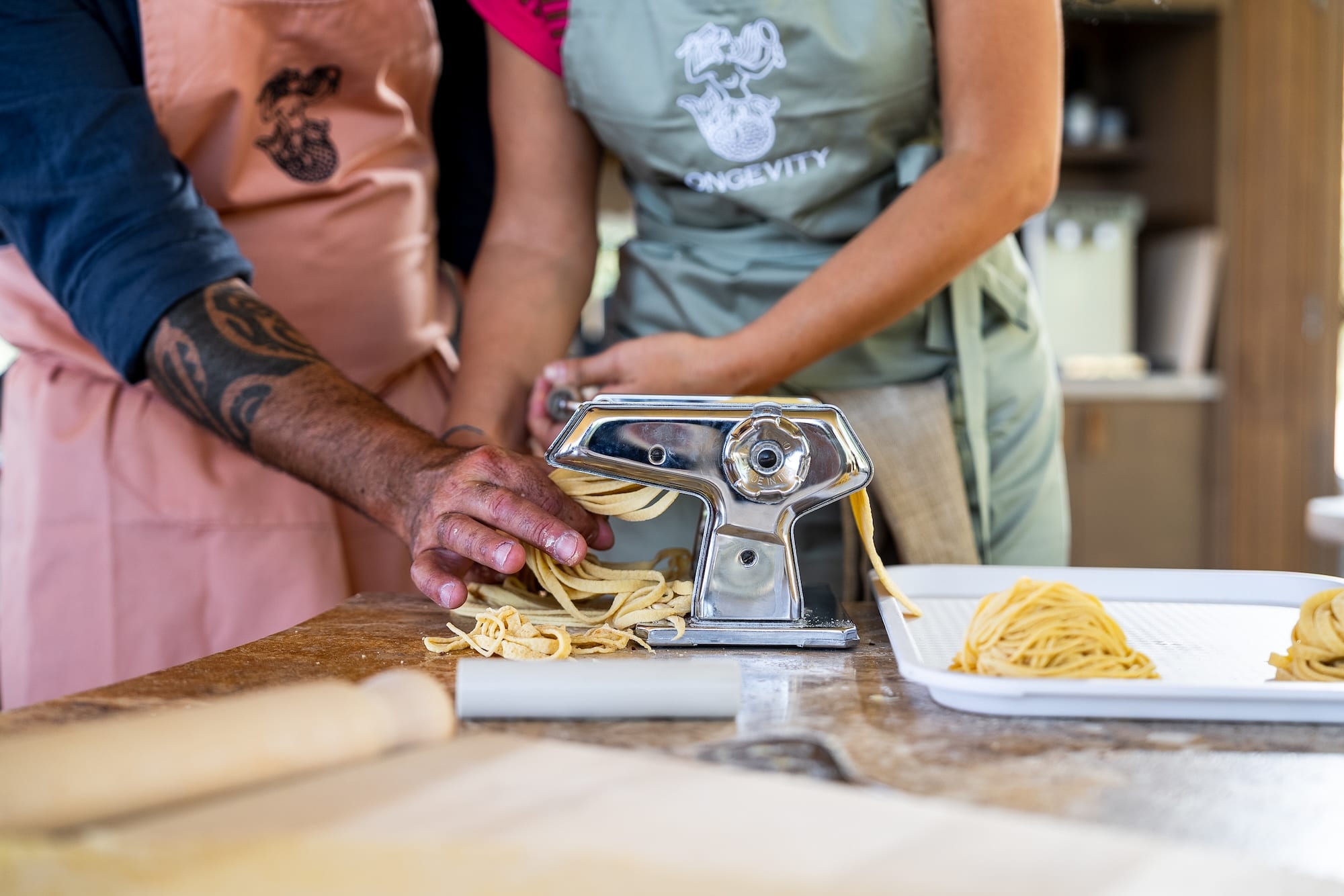
After the harvest, we head back to the patio, to our dedicated table, and start cooking together. That’s really what it’s all about. We share the secrets of grandmothers, of the farmers who worked this land long before us; we talk about simple things and spend time together. Families rediscover the value of doing something together, and of eating together.
When we started shaping this experience, we studied our diet closely — not just the ingredients and what they do for our wellbeing, but also how we eat: together, seated, without phones. We discovered that what felt like simple normality to us is, unfortunately, a much rarer practice than we thought.
Eating together has some unexpected effects on our wellbeing. Back in the 1960s, a group of researchers were baffled by a small town in Pennsylvania: Roseto. Its residents, mostly Italian immigrants, smoked and ate cured meats and lard without a second thought, yet had a strikingly lower rate of heart attacks than the rest of the United States. The famous Roseto Study (published in 1993) reached a conclusion as simple as it was revolutionary: it wasn’t the diet protecting them, it was the community.
In Roseto, life was deeply convivial: three generations under one roof, long dinners, crowded tables, shared laughter. Today, science can explain exactly why this works so well: sitting together, laughing, and sharing a long meal triggers oxytocin — the so-called “bonding hormone” — known for repairing heart tissue and lowering blood pressure. There’s more: eating slowly and socially switches the body into “rest and digest” mode, the state in which we absorb nutrients best.
All of this made us realize that, for us, eating is truly a longevity practice — which is exactly why we called it the Longevity Cooking Class.
The goal was never to send people home with elaborate recipes that turn a simple act into a complicated equation. People leave discovering that a few good ingredients are all it takes to truly appreciate food: a handful of healthy, honest ingredients, and the shared joy of preparing them.
Whether it’s a lunch among friends, a company gathering with a twist, or simply an excuse to be together without rushing, our Longevity Cooking Class is designed for anyone looking for an authentic experience — and, who knows, a few extra years of health and good mood.