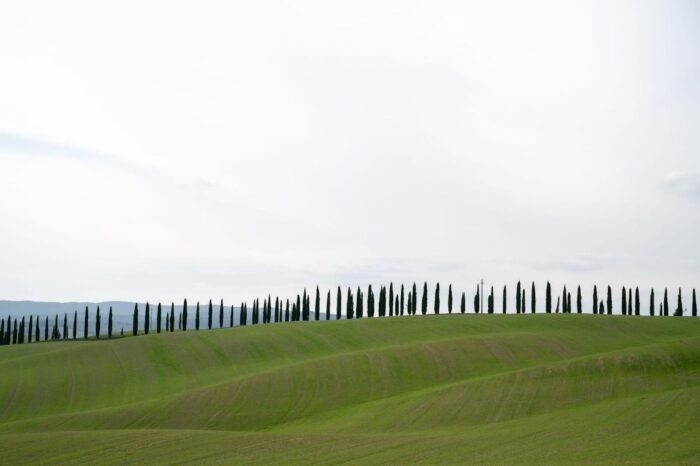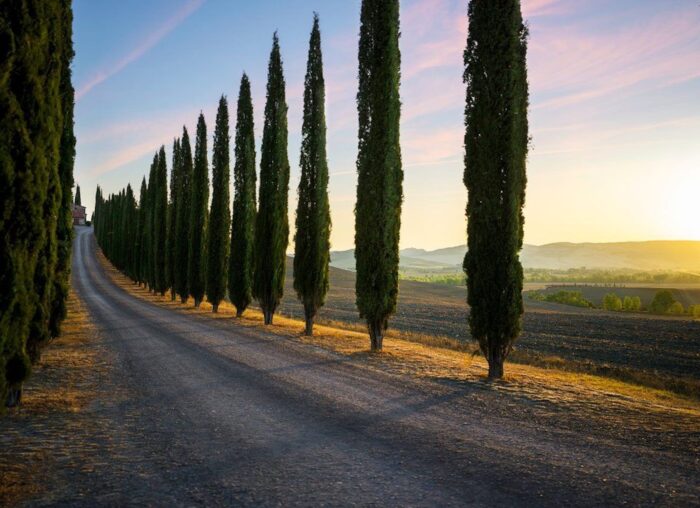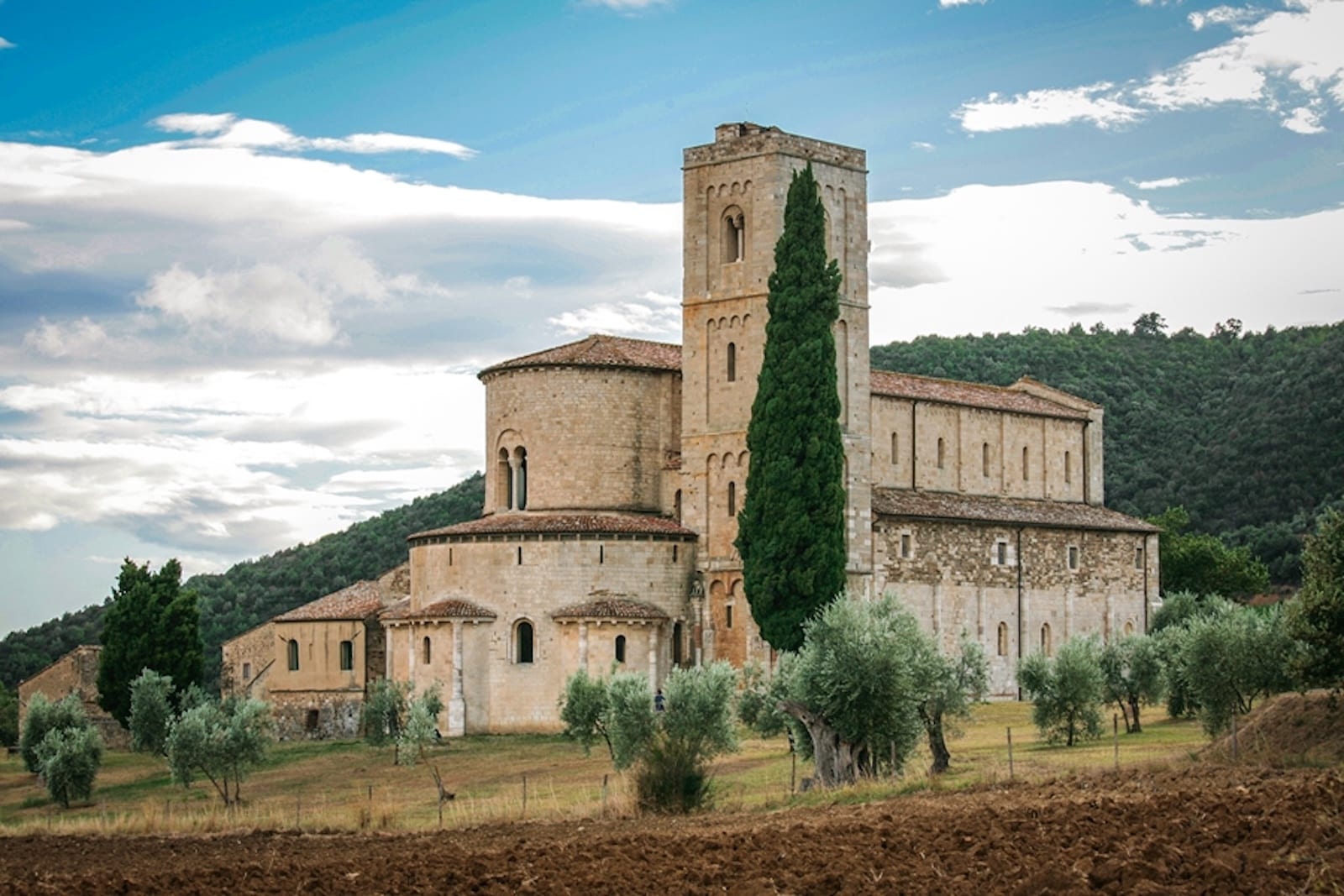
Few landscapes in the world evoke a sense of peace and beauty like the rolling hills of Val d’Orcia. Yet there is one element more than any other that shapes the visual and symbolic identity of this land: the cypress tree. Tall, slender, silent guardians of fields, vineyards, and country paths, they are vertical icons rising from a horizontal landscape. Here, we take you on a journey to discover their aesthetic, symbolic, and historical role in the area surrounding Serendipity.
Cypresses are a constant and reassuring presence. Lined along country roads, standing on hilltops, or watching over old farmhouses, they are among the undisputed protagonists of the Tuscan landscape. But they do not grow just anywhere: their presence is often the result of a human choice, meant to guide the eye, mark boundaries, or protect buildings from the wind.
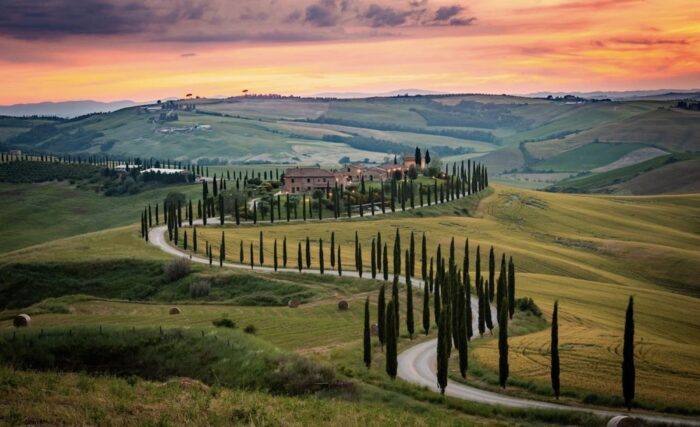
Since ancient times, the cypress has been considered a sacred tree. For the Etruscans and the Romans, it represented the boundary between life and death, perhaps because of its slender shape reaching toward the sky and its evergreen nature, which evokes a sense of immortality. It was planted near necropolises to mark or protect burial sites, acting as a guardian of eternal rest. Even today, it is associated with ideas of eternity, protection, and contemplation. It is not uncommon to find cypresses beside parish churches, rural chapels, or ancient cemeteries, standing like sentinels of passing time.
Some places in Val d’Orcia have become iconic precisely because of the presence of cypresses: the cypresses of San Quirico d’Orcia, among the most photographed in Italy; those along the road to Poggio Covili, with its perfectly aligned rows of trees; and those near the farmhouses around Montalcino, where cypresses signal the feeling of arriving home.
These trees move us because they speak to our subconscious. Their vertical form suggests solemnity, their stillness invites silence and reflection. Walking among cypresses makes us feel part of an eternal landscape, of a story written by people, nature, and time together.
In a frantic world, the cypresses of Val d’Orcia remind us that beauty is vertical, patient, and silent.